Publication of Book on Waugh and Merton Announced

A book by Canadian author and educator Mary Frances Coady on the friendship of Evelyn Waugh and U.S. theologian Thomas Merton has been announced. Entitled Merton and Waugh: A Monk, A Crusty Old Man, and The Seven Storey Mountain, it will be published on March 1, 2015 but is available for preordering now from Amazon.

According to noted Waugh scholar Robert Murray Davis in an advance notice:

… in this brief but thoroughly researched book, Coady provides important new details about Merton’s role not just as willing student but as spiritual advisor to Waugh and puts those details into the cultural and religious context of the years after World War II in clear and sometimes eloquent fashion.

A preliminary reading from the book was presented by Coady at the March 2012 conference, Evelyn Waugh: An Englishman in Catholic America jointly sponsored by the Evelyn Waugh Society and the Loyola-Notre Dame Library in Baltimore.

Share
Posted in Books about Evelyn Waugh, Catholicism | Tagged , | Comments Off on Publication of Book on Waugh and Merton Announced

The Flytes Appear in Guardian’s “Families in Literature” Series

The Guardian newspaper is this week running a series of articles on “Families in Literature.” Yesterday’s article, by Moira Redmond, is devoted to the Flyte family in Waugh’s Brideshead Revisited. Redmond focuses on the familiar theme that Sebastian is using his friendship with Charles to escape from the family, having been smothered by its “charm,” while Charles, having been enchanted by that same feature, seeks entry through Sebastian. Redmond concludes:

The book is a masterpiece: rereading it you can only gaze in admiration at the brilliant and hilarious details, though I’m never too clear how much charm any of the Flyte family has, apart from Sebastian. However Charles finds them so, and that is what matters. What will happen after the war? He will surely stay a family friend. The middle class boy makes good: Charles has found a family – eccentric older brother, loveable younger sister – and he has found God. Sebastian is a casualty along the way.

Other literary families appearing in the Guardian’s series include the Winshaws in Jonathan Coe’s What a Carve Up!, the Marches in Louisa May Alcott’s Little Women and the Chances and Hazards in Angela Carter’s Wise Children.

Share
Posted in Brideshead Revisited, Miscellaneous | Tagged , , | Comments Off on The Flytes Appear in Guardian’s “Families in Literature” Series

Waugh Cited Among Writers’ Christmas Diary Entries

Yesterday’s Independent on Sunday cites several diary entries from English writers, dating back to Samuel Pepys in 1662, in which they describe how they spent Christmas. Waugh’s diary for 25 December 1924 is among those quoted. This was his first Christmas after leaving Oxford earlier that year without his degree:

Evelyn Waugh, the author, aged 21: “I have decided to grow a moustache because I cannot afford any new clothes for several years and I want to see some change in myself. Also, if I am to be a schoolmaster it will help impress the urchins with my age. I look so intolerably young now that I have had to give up regular excessive drinking.

“Christmas Day always makes me feel a little sad; for one reason because strangely enough my few romances have always culminated in Christmas week – Luned, Richard, Alastair. Now with Alastair a thousand miles away and my heart leaden and the future drearily uncertain, things are not as they were. My only letter this morning was a notice of a vacancy from Truman & Knightley [the educational trust].

“There are coming to dinner tonight Stella Rhys and Audrey Lucas and Philippa Fleming. I should scarcely think it will be a jovial evening.”

After the New Year, Waugh began his short-lived career as a school master. Audrey Lucas had a romantic interest in Waugh at this time when he was infatuated with Olivia Plunkett Greene (Hastings, 125-34). Other entries of interest include those of Virginia Woolf (who spent her holiday in 1931 concerned for the health of Lytton Strachey), Raymond Asquith (in a 1913 Christmas message to Diana Manners, later Diana Cooper, enclosing Beardsley drawings in an effort to cheer her up) and Noel Coward (recording his “delicious” Christmas dinner in 1946, a time of darkest austerity).
Share
Posted in Diaries, Miscellaneous | Tagged , , | Comments Off on Waugh Cited Among Writers’ Christmas Diary Entries

NYT Includes Waugh in World Religion Special

This week’s New York Times Book Review is a special edition devoted to the subject of world religion. They asked several authors to recommend novels with religious themes.  Novelist and literary journalist Christopher Beha offered the following recommendation for Waugh’s Sword of Honour trilogy:

“I think it is Waugh’s best work, and it is also one of his most explicitly religious….As a traditionalist Catholic, Waugh was deeply disappointed by the Allied partnership with the Soviet Union, and the underlying theme of the book — that a civilization under threat won’t survive by abandoning what is worth preserving about it — is one worth remembering.”

Beha is a deputy editor of Harper’s Magazine and author of several books including two novels: What Happened to Sophie Wilder (2012) and Arts & Entertainments (2014).  Both of these reportedly have religious themes mixed with comedy echoing those of Waugh.  Beha says he was influenced by Waugh and Murial Spark in his fiction writing. He has in fact been described in the Roman Catholic press as a “Catholic writer” in league with such as Waugh and Graham Greene.

Thanks to Robert Murray Davis for pointing out this reference to us.


Share
Posted in Catholicism, Miscellaneous, Sword of Honour | Tagged , | Comments Off on NYT Includes Waugh in World Religion Special

John Howard Wilson, Jr. PhD (1961-2014)

It is with great sadness that the Evelyn Waugh Society announces the death on 11 December in Erie, Pennsylvania of our founder and renowned Waugh scholar, Dr. John Howard Wilson, Jr. He was 53.

An obituary of Dr. Wilson by Dr. Gayatri Devi, a colleague at Lock Haven University, can be found here.

The Complete Works of Evelyn Waugh project notes Dr. Wilson’s passing here.

An obituary of Dr. Wilson published in the Erie Times-News can be found here.

Memorial donations may be made to:

  • LSA College of Literature, Science, and the Arts
  • University of Michigan
  • 500 South State Street, Suite 5000
  • Ann Arbor, MI 48109-1382

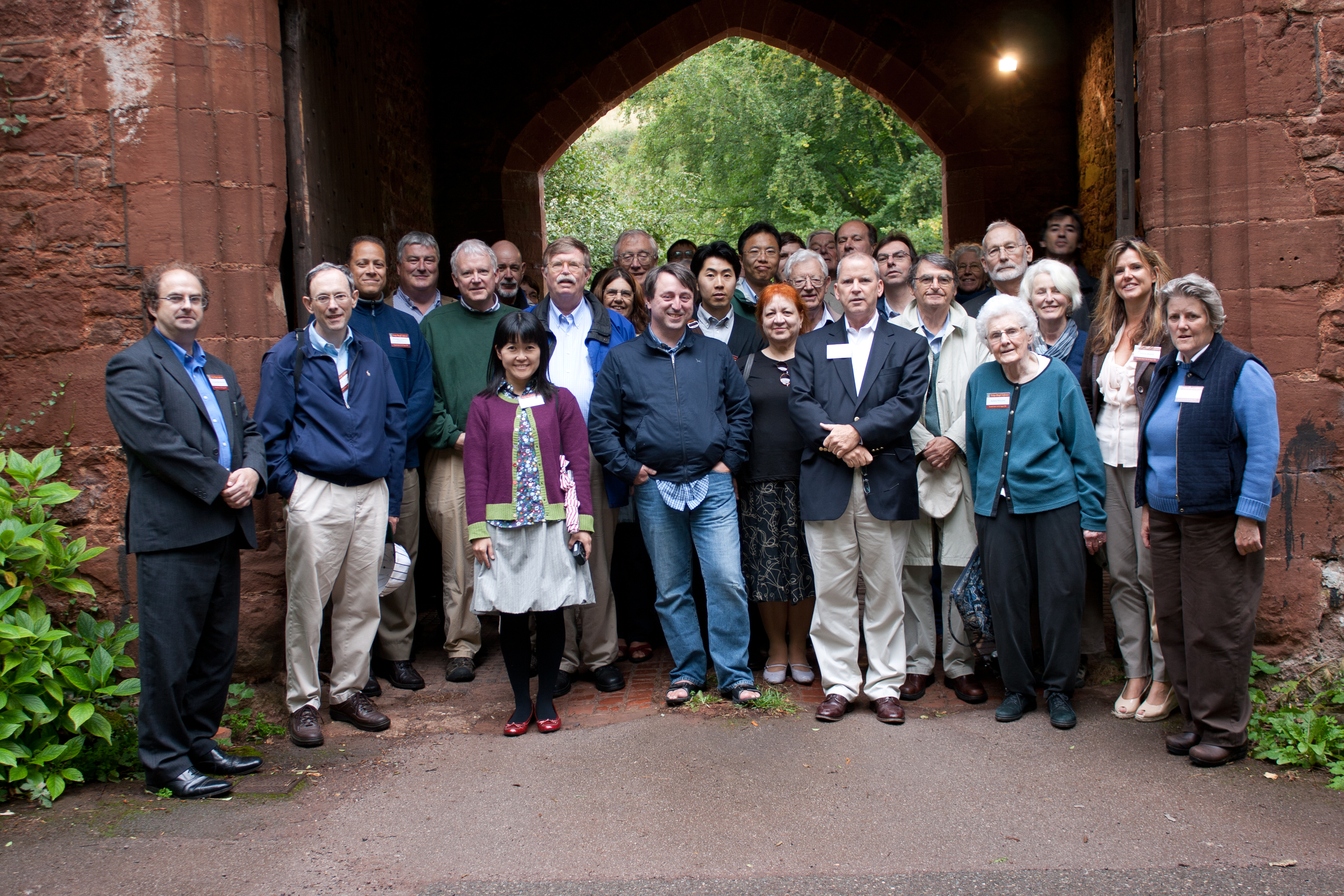
Dr. Wilson (second from left) with members of the Evelyn Waugh Society at Combe Florey in August 2011

Share
Posted in Evelyn Waugh Society | Tagged | Comments Off on John Howard Wilson, Jr. PhD (1961-2014)

Major Study of Waugh’s War Trilogy Published

Two well-known Waugh scholars have collaborated on a detailed study of Waugh’s War Trilogy. Their long-awaited work, In the Picture: The Facts Behind the Fiction in Evelyn Waugh’s “Sword of Honor,” was recently published by Editions Rodopi B.V. (Amsterdam and New York, 360 pp., U.S. $98.73, U.K. £70.20). It consists of two parts. The first by Carlos Villar Flor relates the actual historical facts to the events described in Waugh’s trilogy. The second by Donat Gallagher places into context earlier and controversial interpretations of Waugh’s war career from writers such as Christopher Sykes, Antony Beevor, Lord Lovat and Waugh himself  by comparing them to more objective and complete accounts in other archival materials now available.

Share
Posted in Academia, Books about Evelyn Waugh, Men at Arms, Miscellaneous, Officers and Gentlemen, Sword of Honour, Unconditional Surrender/The End of the Battle, World War II | Tagged , | 1 Comment

Sword of Honour Among Telegraph’s Best War and History Books

Waugh’s Sword of Honour Trilogy was listed by the Daily Telegraph earlier this year among “Best War and History Books of All Time.” The list consisted of 35 books, including both fiction and history in English and translation. Here is the entry for Sword of Honour:

Loosely autobiographical, this three-part meandering, tragic-comic farce paints a convincingly chaotic picture of the British muddling their way to winning the war. It is beautifully world weary and cynical, as the hapless hero is buffeted by the forces of class, waste, spite, cowardice and inefficiency.

The Telegraph offers no criteria for how or by whom selections were made. Other listed WWII novels written in English include Joseph Heller’s Catch-22 (which Waugh dismissed–Letters, 571–as indelicate, prolix, repetitious and totally without structure, although he found much of the dialogue to be funny), Kurt Vonnegut’s Slaughterhouse-5, Norman Mailer’s The Naked and the Dead, and Louis de Bernieres’ Captain Corelli’s Mandolin. Also listed is the translated novel Legion of the Damned by the enigmatic Danish writer Sven Hassel. The list was first published on May 4, 2014 and now appears on the Telegraph’s website under a “Books to Read” collection.


Share
Posted in Miscellaneous, Sword of Honour, World War II | Tagged , , | Comments Off on Sword of Honour Among Telegraph’s Best War and History Books

Waugh Identified as Character Model in Daughter-in-Law’s Thriller

Ephraim Hardcastle, a gossip columnist for the Daily Mail, has identified Evelyn Waugh as a possible model for the villain in his daughter-in-law’s new thriller. Hardcastle writes in the paper’s 25 November edition about the latest novel (A Long Hot Unholy Summer) of Lady Teresa Waugh, widow of  Auberon Waugh, in which there is

a male villain with ‘a troubled past and twisted sexual nature’… Some will suspect the character is modelled on Evelyn Waugh, who had a troubled past and complicated sexual history.

The novel will not be published until next Monday, 1 December.

Hardcastle’s connection between the “male villain” and Evelyn Waugh apparently was made without the benefit of his having read any more than the publisher’s blurb, from which he quotes. It seems unlikely that there could be any reasonably justifiable connection to be made to a character who, so far as appears from that blurb, may be suspected as an online sexual predator of young girls–hardly the sort of “complicated sexual history” one would associate with Evelyn Waugh. If there were a basis for Waugh as a character model in another writer’s novel, that would not be his first such appearance. There are characters in novels by Henry Williamson (Anthony Cruft in The Power of the Dead) and Ferdinand Mount (a WWII book-writing Army officer called “Wigg or Wogg,” in The Man Who Rode Ampersand) that are obvious ringers for Waugh.

Share
Posted in Auberon Waugh, Miscellaneous | Tagged , , | Comments Off on Waugh Identified as Character Model in Daughter-in-Law’s Thriller

Waugh Cameo in BBC Series on Tatler Magazine

BBC has started a series of three programs on Tatler magazine: Posh People: Inside Tatler. In the first episode (Monday, 24 November) Matthew Bell, newly appointed Commissioning Editor, is among those interviewed. He was formerly the society diarist for the Independent on Sunday newspaper but describes himself as from a solidly middle class family. The editor, Kate Reardon, explains that the magazine is as interested in the well-behaved newly rich as it is in the debauched aristocracy.  In pursuit of the latter, Bell is dispatched to Oxford to investigate the Bullingdon Club, and specifically to find out how they have managed to suppress the club photograph that included David Cameron in his days as a member. Bell is filmed outside Hertford College (40:27), which he explains was where Evelyn Waugh lived as an undergraduate. He cites Waugh as having satirized the Bullingdon in Decline & Fall where he described it as “the sound of English county families baying for broken glass.” He might have mentioned that Waugh renamed it the Bollinger. Bell attributes his own interest in the upper class life to his having read Waugh’s novels from the age of 12. As depicted by Waugh, the upper classes appealed to Bell as seeming to have “such a fun time, in a romantic world.” The series continues on BBC 2 next Monday and can be viewed on the internet via BBC iPlayer for the next four weeks. A proxy server connection is needed from outside the UK.

Share
Posted in Decline and Fall, Documentaries, Miscellaneous, Oxford, Television Programs | Tagged , , , , | 1 Comment

Guardian Adds Scoop to Top 100 Novels List

Robert McCrum, novelist and literary journalist, has for several months been writing a weekly Guardian column naming and discussing what he considers the 100 best novels in English. He is working through the history of English novel year by year from the “beginning” (Pilgrim’s Progress) to the present day (although some years are skipped over and others have multiple selections). He has now arrived at the 1930s. His latest selection, no. 60 on the list, is Waugh’s Scoop, which was also recently named by the Daily Telegraph in an anonymous top 100 list. McCrum’s columns usually stir up a lively discussion among Guardian readers, and this one is no exception, with expressions of supporting and contrary views of the book selected. There are several votes for Handful of Dust among this week’s commenters. Most of McCrum’s own commentary addresses the journalistic targets of Waugh’s satire. This is not surprising, given McCrum’s career as a literary journalist. I feared that he might miss out my own favorite parts of the book, which are those that take place at Boot Magna. But I was gratified when I reached his conclusion:

Many of these caricatures might remind some readers of Waugh’s debt to Dickens, but Scoop remains fiercely modern. So little has really changed. The six words of “Up to a point, Lord Copper” conjure a marrow-freezing universe of corporate fear. Most famous of all, there’s the glorious parody of the “feather-footed” vole questing through the “plashy fen”, a pointed reminder of the deep sentimentality always to be found in the Street of Shame.


Share
Posted in A Handful of Dust, Miscellaneous, Scoop | Tagged , , | Comments Off on Guardian Adds Scoop to Top 100 Novels List